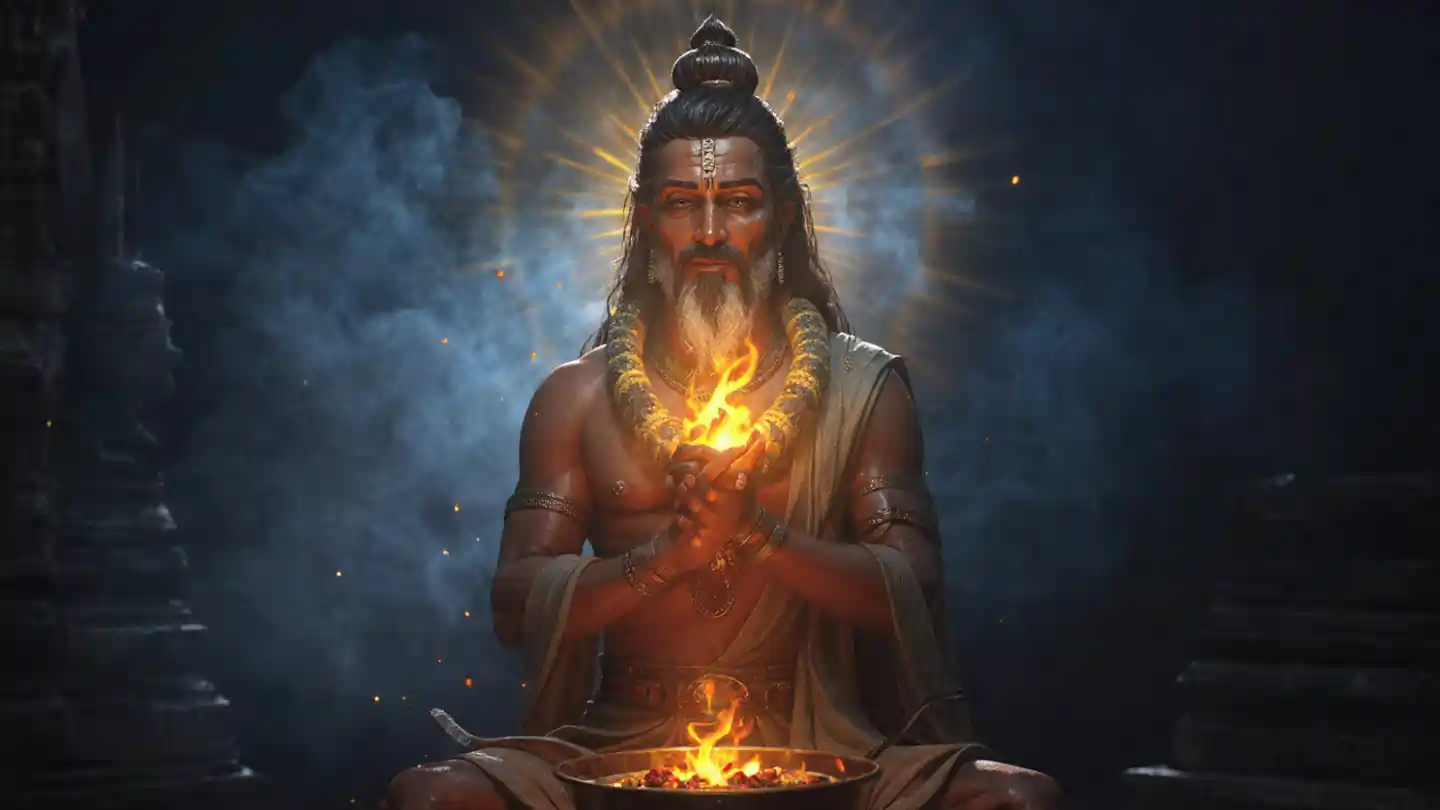
Among the countless names of Mahadev, the name that touches the heart the most is Neelkanth—the One with the blue throat.
Every devotee has heard this name since childhood, yet only a few know the full meaning, the real story, and the deeper scientific explanation hidden behind it.
This post explains in simple, human tone:
- The true story behind Shivji Neelkanth,
- The spiritual symbolism of the blue throat,
- The scientific perspective,
- And what this story teaches us today.
Let’s begin the divine journey.
⭐ What Does “Neelkanth” Mean?
The word Neelkanth comes from two Sanskrit words:
- Neel – Blue
- Kanth – Throat
So Shivji Neelkanth means “The One with the Blue Throat.”
This blue colour isn’t a decoration—it is a symbol of supreme sacrifice and cosmic protection.
🌊 The Real Story: Samudra Manthan & The Deadly Poison
To understand why Shivji became Neelkanth, we must revisit the grand event of Samudra Manthan—the churning of the cosmic ocean.
Devas and Asuras were churning the ocean to obtain Amrit (nectar of immortality).
But before the nectar appeared, something terrifying emerged:
A deadly, universe-destroying poison called Halahala.
This poison was so powerful that:
- The winds turned toxic
- The oceans heated
- Planet earth began to tremble
- All beings—mortals and immortals—suffered
One drop of this poison could destroy creation.
Both Devas and Asuras panicked.
There was only one protector they could run to—Mahadev.
🔱 Shivji’s Divine Sacrifice
Shivji saw that if this poison spread, the world would end.
To save all beings, He did something unimaginable:
He swallowed the poison.
But Parvati Ma lovingly held His throat so the poison would not enter His stomach.
It stayed in His throat, turning it deep blue.
And from that moment, the world began calling Him:
“Neelkanth” — The Blue-Throated Savior.
This is not just mythology—this is unmatched compassion.
🌌 Spiritual Meaning Behind the Neelkanth Story
The story of Shivji Neelkanth is filled with deep symbolism that is useful even today.
⭐ 1. Absorbing Negativity Without Spreading It
Shivji didn’t throw the poison on others.
He contained it.
This teaches us:
You can experience pain, anger, and negativity—but you don’t have to pass it on.
A strong person transforms pain, not transfers it.
⭐ 2. The Power of Inner Strength
Shivji didn’t fear poison because His inner stability was stronger than any external danger.
The message is clear:
“A calm mind can face storms that a restless mind cannot.”
⭐ 3. Sacrifice for the Greater Good
The most beautiful part of the story is that Shivji didn’t gain anything personally.
He wasn’t fighting for power, praise, or reward.
He acted purely out of love.
That’s why devotees say:
“Shiva is Bholenath because His heart is pure.”
⭐ 4. Balance of Masculine & Feminine Energy
Parvati Maa holding the poison in His throat symbolizes balance.
Shiv-Shakti together protect the world.
It signifies that even the greatest power needs compassion beside it.
🧬 Scientific Meaning Behind Shivji Neelkanth
Indian scriptures often hide scientific truths in symbolic language.
The Neelkanth story also carries powerful scientific meaning.
1. Throat as the Vishuddhi Chakra
In yogic science, the throat chakra is called Vishuddhi, which literally means “purification.”
It controls:
- Emotions
- Communication
- Reactions
- Balance
Shivji holding poison in the Vishuddhi Chakra symbolically means:
“Transform negativity without letting it pollute your inner self.”
2. Poison = Stress, Trauma, Negative Emotions
Modern psychology says:
- Anger
- Hurt
- Fear
- Trauma
- Negativity
are like poison.
Holding them without letting them control you is emotional mastery—the essence of Neelkanth symbolism.
3. Blue Color = Cooling Energy
Blue represents calmness and cooling properties.
Scientifically, when the throat chakra is activated:
- Stress reduces
- Mind becomes balanced
- Emotional energy transforms
Shivji’s blue throat is a symbol of perfect emotional regulation.
4. Drinking Poison Means Neutralizing Toxins
Taking poison into the throat without letting it harm the body shows:
- High-level immunity
- Body’s ability to neutralize toxins
- Extreme control over physiological responses
This reflects yogic super-science practiced by ancient masters.
💛 Human POV: What Neelkanth Teaches Us Today
Every person in today’s world goes through moments where negativity feels too much:
- Someone hurts you
- Family pressure
- Financial stress
- Emotional wounds
- Social toxicity
The Neelkanth story teaches:
✔ Hold negativity
✔ Don’t swallow it
✔ Don’t spit it at others
✔ Transform it through awareness
This is the highest form of strength.
🕉️ Why Devotees Love the Name Neelkanth So Much
Because the name represents:
- Protection
- Sacrifice
- Kindness
- Strength
- Emotional depth
- Divine love
Shivji didn’t wear ornaments of gold.
His ornaments were compassion and sacrifice.
That is the beauty of Mahadev.
🔥 Final Conclusion: The True Meaning of Shivji Neelkanth
Shivji is called Neelkanth because He absorbed the world’s poison without letting it destroy creation.
His blue throat symbolizes:
- Courage
- Balance
- Transformation
- Wisdom
- Emotional power
- Infinite compassion
Whether you look at it spiritually or scientifically, the Neelkanth story is a lesson in how to face negativity with grace.
Shivji teaches:
“Do not fear poison. Transform it with inner strength.”
Har Har Mahadev! 🔱
📖 Read Also
1️⃣ LPG Gas Cylinder Price Today
2️⃣ Ujjwala Yojana जानकारी
3️⃣ KisanSuvidha Goverment Scheme
4️⃣ Bajrang Baan PDF – बजरंग बाण पाठ, लाभ और महत्व
5️⃣ Shiv Stuti Lyrics – शिव स्तुति का पाठ और अर्थ
❓ FAQs
Because He held the deadly Halahala poison in His throat during Samudra Manthan.
It symbolizes purification, sacrifice, emotional balance, and protection.
He didn’t swallow it; He held it in His throat to save creation.
It represents negativity, ego, illusions, and emotional toxicity.
It relates to activation of the Vishuddhi Chakra—the body’s purification and emotional-regulation center.